

Perspective | As Cars Get Smarter, People Begin to Miss Driving
2026/07/14 Shadow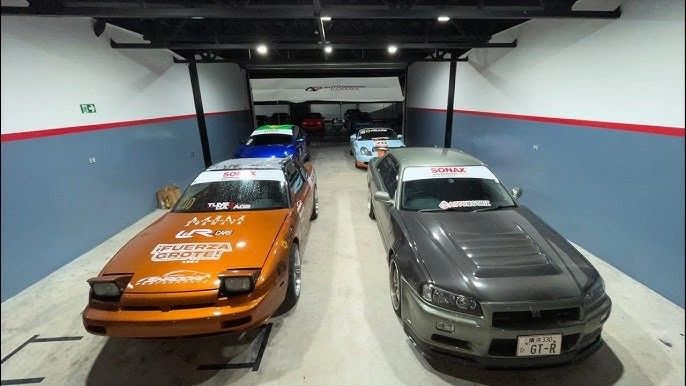
JDM turbo cars are once again gaining attention among enthusiasts.
Twenty-five years is long enough for cars that once appeared in new vehicle catalogs to gradually disappear from the road. It is also long enough for many JDM models once seen only in automotive magazines, racing games, and movies to return to the spotlight.
As more Japanese-market vehicles reach the United States’ 25-year import threshold, these JDM performance cars are becoming available to a new generation of owners—not only as collectibles, but as cars that can be driven, modified, and enjoyed.
Registration requirements still vary by state, but the door that was once firmly closed has now begun to open.
Automatic emergency braking, lane-keeping assistance, adaptive cruise control, and other driver-assistance technologies allow modern vehicles to handle more tasks on behalf of the driver. For everyday transportation, these systems reduce fatigue and make driving safer and more convenient.
However, as cars become increasingly capable of completing the driving process for us, some people find themselves searching for a car that still requires their participation.
Someone once said:
“Life is too short to drive boring cars.”
.jpg "Heavily or lightly modified engine bays_20260714 (1-2)")
.jpg "Heavily or lightly modified engine bays_20260714 (1-3)")
.jpg "Heavily or lightly modified engine bays_20260714 (1-1)")
The genuine feedback transmitted through a hydraulic steering system, the noticeable torque transition before and after the turbo begins to build boost, and the speed, timing, and shift shock that must be managed with a manual transmission may feel uncompromising.
Yet these are also some of the qualities that make performance cars from that era difficult to replace.
Daily transportation requires safety and convenience, while driving as a passion requires feedback and involvement. These two ideas are not in conflict; they simply belong to different driving situations.
What people miss is not necessarily a slower, louder, or less convenient car. They miss the feeling that every input receives a clear and immediate response.
The Temperament of an Old-School Turbo Is Also Part of Its Appeal
.jpg "Heavily or lightly modified engine bays_20260714 (4)")
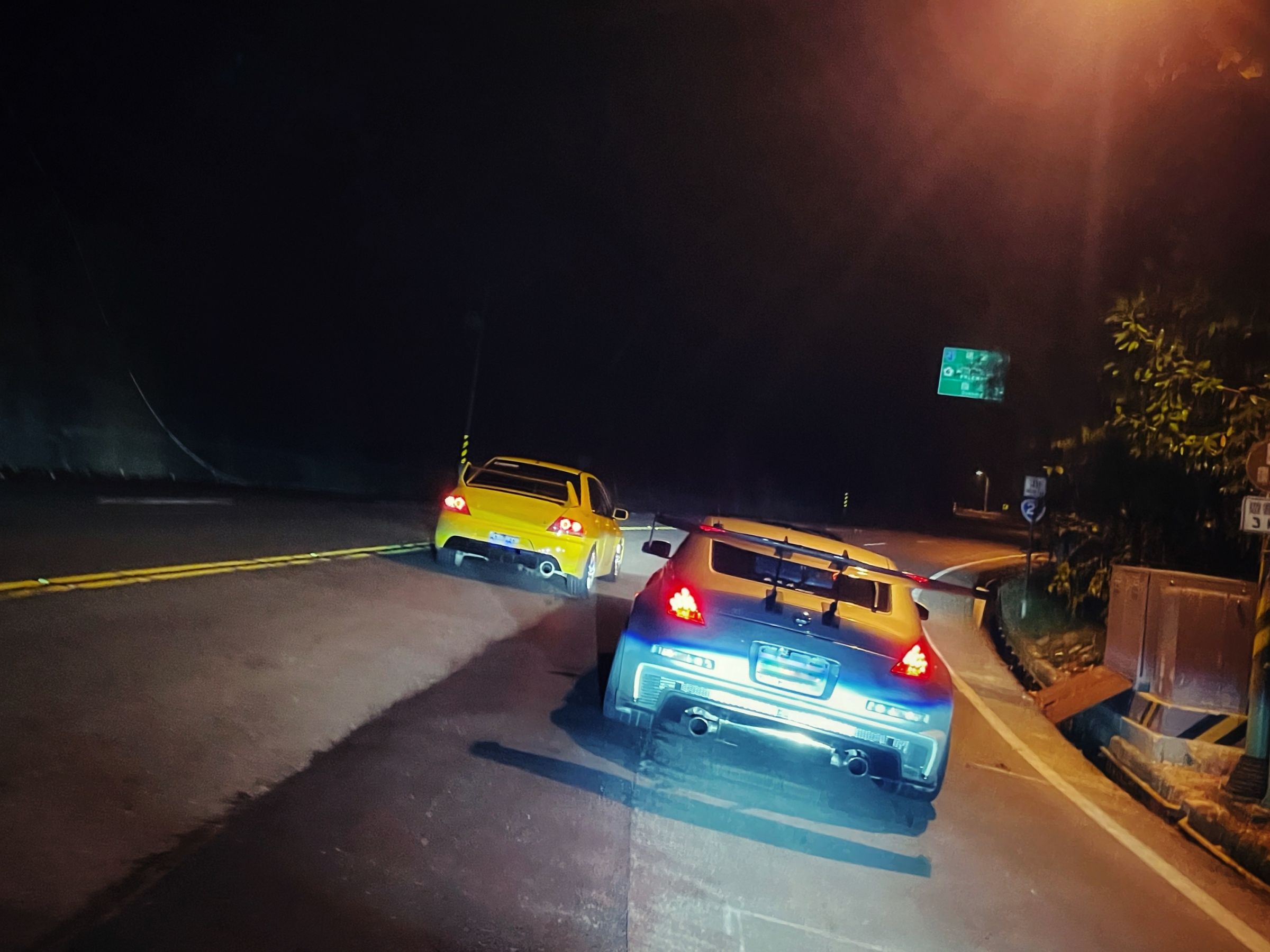
When a turbocharged performance car still uses mechanical architecture developed in the previous century, its turbo system naturally appears outdated by today’s standards.
Unavoidable turbo lag, the sudden surge of power as positive boost arrives, the need to rebuild boost after each gear change, and flames from the exhaust caused by a rich air-fuel mixture during throttle lift-off are all part of the distinctive sensation and visual character associated with old-school turbocharged cars.
These vehicle responses are not always smooth or precise, but together they create the unique driving rhythm of that era.
The driver must understand the relationship between engine speed, throttle position, and turbocharger response in order to anticipate when the power will arrive.
For purists who insist on preserving the original configuration, these imperfections are part of the experience.
For most owners who still want to drive these vehicles regularly, however, preservation does not mean that every limitation of the original control system must also remain unchanged.
Owners may enjoy the dramatic transition when boost arrives and want to retain the car’s direct, distinctive power delivery. At the same time, they may also expect more predictable boost response, more stable boost at higher engine speeds, and the ability to adjust the vehicle for street driving, mountain roads, or different operating conditions.
The purpose of electronic control is not to make an old car behave like a new one. It is to use today’s technology to make its original character easier to understand and enjoy.
.jpg "EBC-lite_funtion_en_20260714 (1)")
Redesigned Around Stability, Essential Functions, and Accessibility
As these classic turbocharged cars return to the road, Shadow began considering one question:
How can the distinctive power delivery of an old-school turbo system be preserved while making boost control easier to understand and more suitable for today’s driving needs?
Traditional manual boost controllers are affordable and easy to access, but they generally lack active overboost protection. More advanced electronic boost controllers offer greater control precision, but they often come with higher prices and more complicated setup procedures.
EBC-LITE was therefore redesigned around three priorities: stable operation, essential functionality, and a lower barrier to entry.
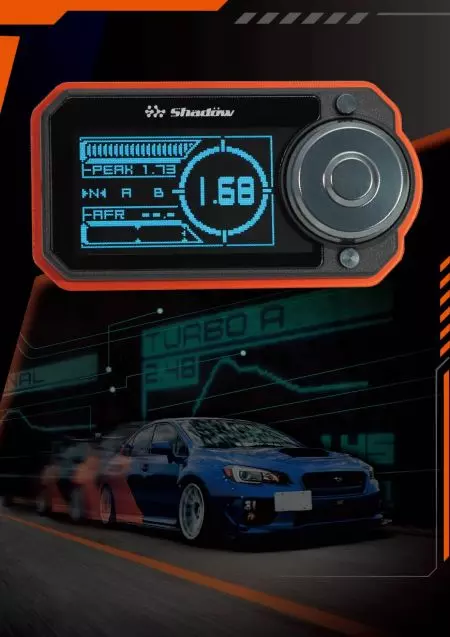
Complex boost control settings are organized into three clear adjustment areas: when control begins, how quickly boost builds, and how boost is maintained at higher engine speeds.
Drivers do not need to manage a large number of interconnected parameters to understand how each adjustment changes the vehicle’s response.
EBC-LITE also retains overboost protection as a fundamental safeguard—something that should be considered essential for any electronic system responsible for managing boost pressure.
The objective of EBC-LITE is not simply to pursue higher boost pressure. It is designed to improve the aspects of an old-school turbo system that are difficult to control, making its response more predictable and allowing drivers to enjoy the vehicle with greater confidence.
.jpg "EBC-lite_funtion_en_20260714 (2)")
Keeping Machines from the Past Driveable Today
Automotive technology continues to evolve, but that does not mean the driving experience of the past has lost its value.
EBC-LITE is not designed to turn a classic turbocharged car into a modern one. Instead, it uses today’s electronic control technology to help drivers better understand, adjust, and manage the character that has always made these cars unique.
What is truly worth preserving is not just a car from a particular era, but the feeling that the driver and the machine can still communicate with each other.
- Related Products
-
-
EBC-Lite Electronic Boost Controller
SW16019-28
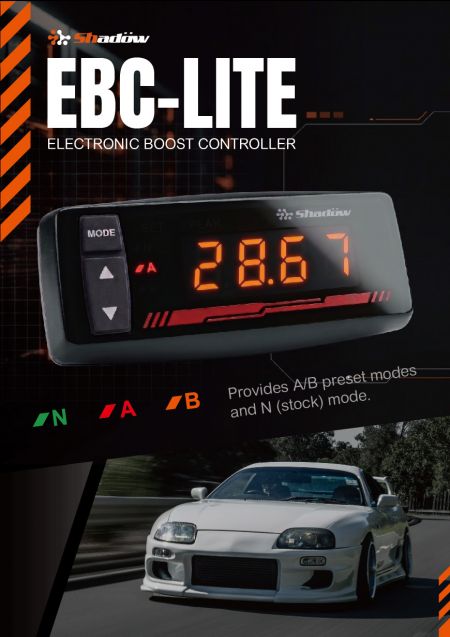
EBC-Lite is an electronic boost controller developed from Shadow's DEBC II control logic. With a more compact display and simplified interface, operation is more intuitive, and installation is cleaner and more streamlined. For turbocharged vehicles, precise boost control is the foundation of stable power output. EBC-Lite helps users take control of when boost engages, how quickly pressure builds, how stable the plateau is, and when to protect.
-
Know you the best
SHADOW will not only be a pronoun of global automotive electronics products in the future, but also a good partner for modified car owners! Let more people experience the pleasure and convenience of modified vehicles through SHADOW's products!
Advantage
-
Water Temperature Gauge The Shadow Water Temperature Racing Gauge features a highly responsive needle that provides real-time, accurate readings of coolant temperature, allowing drivers to monitor engine conditions at all times... Read More